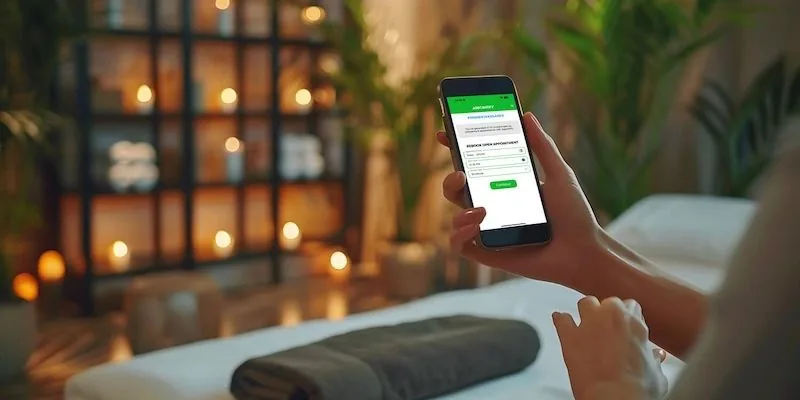
Every appointment business has a stretch where the phone goes quiet. The weeks after the holidays, the dog days of summer, the lull between busy seasons in your town. If you rely on slow season bookings to carry you through, a few empty days each week can quietly eat a whole month of profit before you notice.
The good news is that a slow season is rarely a demand problem. Your clients still want to see you. They have just drifted off their usual rhythm, and nobody has given them a reason to book right now. This post walks through practical ways to keep your calendar full when things cool down, without slashing your prices or burning out on marketing.
Why slow season bookings dry up in the first place
Slow periods usually come from a mix of habit and inertia rather than a sudden drop in interest. After a holiday rush, clients feel tapped out. In summer, they travel and fall out of routine. When the weather turns, they cocoon at home. None of that means they have left you. It means the standing appointment that used to feel automatic now competes with a dozen other distractions.
The businesses that stay booked through these stretches share one habit: they stay in front of their clients and make it effortless to grab an open time. When someone finally thinks "I should get in soon," you want to be the first name that pops up, with a slot they can claim in seconds.
That is also why the slow season is the perfect time to tighten up how you fill open slots. When you are slammed, gaps fill themselves. When you are quiet, every empty hour is a decision you get to make on purpose. A little system now pays off all year.
Build a waitlist before you need it
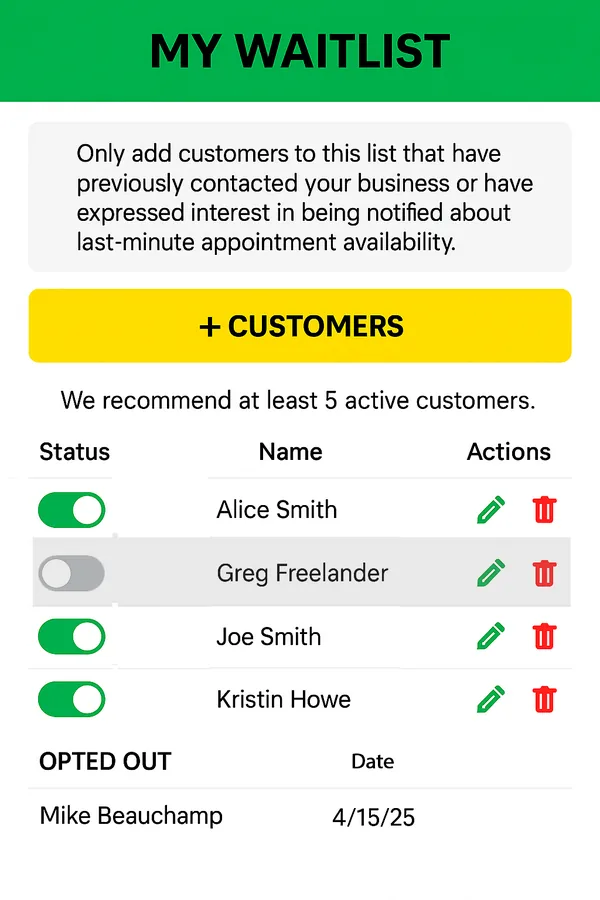
The single best move for a slow stretch is a ready-to-go waitlist of clients who have told you they want in when a spot opens. Instead of scrambling to fill a Tuesday afternoon, you tap a list of people already raising their hand. The first one to reply takes the slot, and your calendar quietly refills itself.
This is exactly the gap Appointify was built to close. It is a free app that runs alongside your existing booking software and instantly texts your in-app waitlist the moment a slot opens. You do not replace your scheduler or learn a whole new system. You just add a fast, automatic way to fill the openings a slow season creates. If you want the full picture, here is how Appointify fills last-minute cancellations without you lifting a finger.
Who belongs on your slow-season waitlist
- Regulars who skipped their usual visit this month and are overdue
- Clients who asked for an earlier time but had to settle for later
- Flexible people who can come in on short notice midweek
- New clients who booked once and never rebooked
Adding people takes seconds, and every name is one more chance to fill a gap without discounting your work. The bigger your waitlist heading into a slow season, the less any single quiet week can hurt you.
Give clients a reason to book now, not "someday"
During a slow stretch, "I'll come in eventually" is your enemy. Vague intentions never make it onto a calendar. Your job is to turn a someday into a specific day, and that usually comes down to nudges, convenience, and a light sense of urgency.
Reach out with a friendly, personal message rather than a generic blast. A quick "I have a couple of openings this week if you want to get in before things pick back up" feels like a favor, not a sales pitch. Pair that with a booking option they can act on in one tap, and you remove the friction that lets a slow week stay slow.
You can also lean on scarcity honestly. When a canceled slot genuinely opens, letting your waitlist know it is available and first-come creates real momentum. Different trades run into different quiet patterns, so it helps to see approaches tailored to your field. Appointify is built as a waitlist app built for your industry, whether you run a salon chair, a treatment room, or a studio. Fitness pros in particular can see a waitlist app for personal trainers that keeps standing sessions from evaporating over the summer.
A few more nudges that work well in a quiet stretch:
Rebook clients before they leave. The easiest appointment to fill is the next one, booked while they are still in your chair. Ask everyone to set their next visit before they walk out, especially heading into a season you know runs slow.
Reactivate lapsed clients with a simple check-in. People who have not booked in a while are often just waiting for a reason. A short, warm message that it has been a while and you would love to see them soon can bring back more bookings than any coupon.
Make filling open slots automatic
Manual outreach works, but it does not scale, and it is the first thing to slip when you are busy running the rest of your business. The real win is a system that catches every opening and fills it for you, so a slow season never depends on you remembering to send texts.
When a client cancels, Appointify texts your waitlist right away and books whoever replies first. That means a cancellation stops being a hole in your day and becomes a chance to move someone up. Over a slow month, filling even one or two extra slots a week adds up to real money you would otherwise have lost to an empty calendar.
It is worth being clear about what the app does and does not do. Appointify is not a full scheduler and it is not a payment processor. It does one job extremely well: it fills the openings your slow season creates by connecting an open slot to a client who wants it. It is always free, needs no credit card, has no per-booking fees, and sets up in a few minutes alongside the tools you already use.
Turn your slow season into a full calendar
A quiet stretch does not have to mean a lean month. Build your waitlist before demand dips, give clients easy reasons to book now instead of later, and let an automatic system fill every opening the moment it appears. Do that and your slow season starts looking a lot more like your busy one.
Appointify makes all of it effortless and free. Add your regulars, let the app text them when a slot opens, and watch your calendar stay full even when the phone would otherwise be quiet.