
Every appointment business has them: the weeks where the calendar looks full on Monday and then slowly hollows out. A client reschedules, another cancels, a regular skips their standing slot, and by Thursday you are staring at gaps you cannot fill fast enough. Learning how to protect your slow week revenue is one of the most practical skills an owner or solo pro can build, because those quiet stretches are usually recoverable if you act quickly instead of waiting for the phone to ring.
The good news is that a slow week is rarely a demand problem. More often it is a timing problem. Plenty of clients would happily take an earlier or sooner appointment if they simply knew one had opened. Your job is to close the gap between "a slot just opened" and "a paying client is sitting in it." Below are the moves that consistently turn a soft week back into a profitable one.
Why slow weeks quietly drain your slow week revenue
An empty slot is not neutral. It is a fixed cost with nothing coming in against it. Your rent, your staff hours, your equipment, and your own time are all running whether a client shows up or not. When a two o'clock cancels and stays empty, you did not just lose that one booking. You lost the only chance you had to earn during that specific hour, and that hour never comes back.
Most owners underestimate how much this adds up because it happens in small pieces. One cancellation here, one reschedule there. But three empty afternoons across a month can easily equal a full day of lost income. The businesses that stay consistently booked are not the ones with more demand. They are the ones with a faster, more reliable way to react when a hole appears.
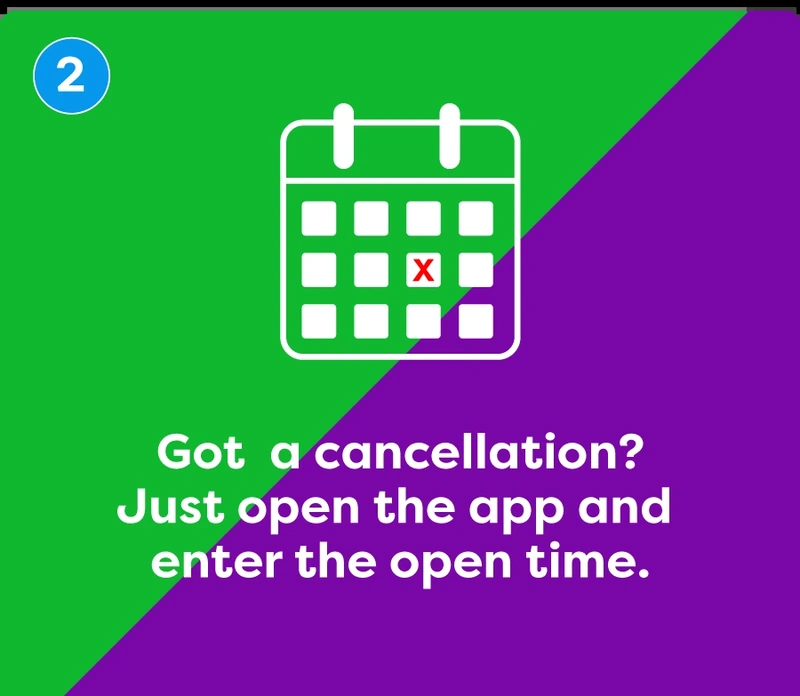
This is exactly the problem a waitlist solves. Instead of scrambling to remember which client might want an earlier time, you keep a standing list of people who have already told you they want in. When a slot opens, you reach out to that group first, and the fastest reply wins the spot.
Turn cancellations into same-day bookings
The single fastest way to recover a slow week is to fill cancellations the moment they happen. Speed is everything here. A client who cancels at nine in the morning leaves you a full workday to rebook that slot, but only if you can notify interested clients within minutes rather than hours.
Manual outreach rarely keeps up. You are busy with the clients in front of you, and by the time you get a break to send a few texts, the window has narrowed. This is where an instant waitlist tool changes the math. When a slot opens, your waiting clients all get a text at once, and the first person to reply books it. You go from a hole in your schedule to a confirmed appointment without lifting a finger. See how Appointify fills last-minute cancellations and you will notice the whole point is removing the delay that costs you money.
Because Appointify runs alongside your existing booking system rather than replacing it, you do not have to change how you take appointments. It simply sits on top of your calendar and handles the one thing manual texting does slowly: reaching everyone at once, the instant a spot frees up.
Build a waitlist before you need it
The best time to build a waitlist is not during a slow week. It is now, while your schedule is healthy, so the list is ready the moment things soften. Every client is a candidate. The regular who wanted an earlier time, the new client you had to book three weeks out, the person who asked to be called if anything opened up. All of them belong on your list.
Make adding clients a habit rather than an afterthought. A few natural moments work well:
- When a client asks for a sooner appointment than you can offer, add them right then.
- At checkout, ask if they want to hear about earlier openings for their next visit.
- When someone cancels, invite them to join the list for a better time.
The more people on your waitlist, the higher the odds that any given opening gets claimed fast. A list of five might sit quiet for an hour. A list of fifty usually fills a slot in minutes. If your work is specialized, the same logic applies to niche businesses too. A waitlist app for personal trainers, for example, keeps regulars who want extra sessions ready to grab a canceled block the same day.
Match the recovery play to your business
Slow weeks look different depending on what you do, and the way you recover should fit your rhythm. A salon might see gaps cluster on weekday mornings, while a wellness practice feels them most around holidays. Knowing your own soft spots lets you get ahead of them instead of reacting after the fact.
Once you know the pattern, you can prime your waitlist for it. If Tuesdays run light, mention to Tuesday-flexible clients that openings tend to appear then. If a holiday week is coming, remind your list a few days early that slots may free up. You are not inventing demand. You are pointing existing demand at the exact times you need to fill.
Appointify is built to flex across different fields, so the approach works whether you run a chair, a table, a studio, or a treatment room. You can explore a waitlist app built for your industry to see how the same fill-the-gap method adapts to your specific clients and schedule. The mechanics stay simple: keep a list, notify fast, let the first reply win.
Make slow weeks the exception, not the norm
You cannot stop clients from canceling, and you should not try to. What you can control is how quickly you respond when they do. A soft week is only permanent if you let openings sit empty. Fill them fast, keep a waitlist stocked, and those quiet stretches stop cutting into your income. Recovering slow week revenue comes down to reacting in minutes instead of days, and the right tool makes that automatic.
Appointify is free, sets up in a few minutes, and needs no credit card, so there is nothing standing between you and a fuller calendar. Start building your waitlist today, and let it do the fast work the next time a slot opens up.