
A client cancels two hours before their appointment. You have an open chair, a slow afternoon, and a real choice to make. Do you thumb through your contacts and start texting people one by one, or do you let a tool do it in seconds? That question is the heart of the waitlist app vs manual texting debate, and it comes up in almost every appointment-based business.
Both approaches try to solve the same problem: an empty slot that used to be revenue. The difference is how much of your time, focus, and goodwill each one costs you to fill it. Let's walk through how they actually compare in the real world, so you can pick the approach that keeps your calendar full without burning you out.
What texting clients manually really costs you
Manual texting feels free because you already own a phone. But the cost shows up in your attention. When a spot opens, you have to stop what you're doing, decide who might want it, scroll to find their number, type out a message, and then wait. If the first person doesn't answer, you start over with the next one. By the time you've reached three or four people, twenty minutes have slipped by and the slot is still empty.
There's a hidden social cost too. If you blast the same "I have a 3pm open, want it?" text to eight clients at once, several of them reply yes and only one can have it. Now you're apologizing to the rest, and they feel like an afterthought. Do that a few times and people stop responding at all, because they've learned the offer is a race they usually lose.
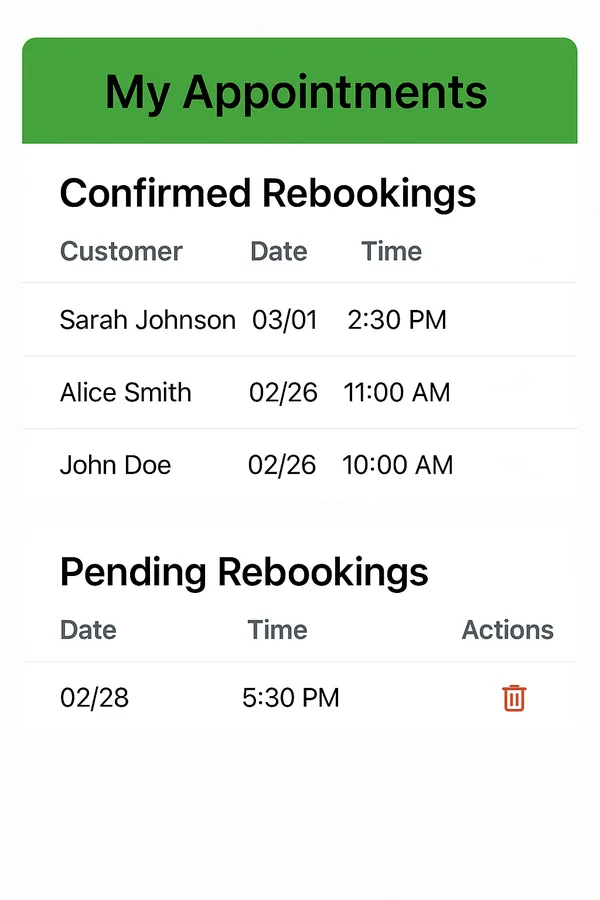
Manual texting also doesn't scale with your day. On a quiet Tuesday you might have the bandwidth to work the phones. On a chaotic Saturday with three cancellations, you simply won't, and those slots go dark. The method depends entirely on you having free hands at the exact moment a gap appears, which is rarely when it actually happens.
Waitlist app vs manual texting: how the app changes the math
A waitlist app flips the workflow. Instead of you chasing clients, the app reaches everyone on your waitlist the instant a slot frees up, and the first person to reply claims it. You tap once, and the outreach, the timing, and the "sorry, it's taken" all happen without you lifting a finger again. That's the core of the comparison: manual texting spends your time, while a waitlist app spends the app's time.
Appointify works exactly this way. It's a free mobile app for iOS and Android that fills last-minute cancellations by texting your in-app waitlist automatically, and it runs alongside whatever booking software you already use rather than replacing it. You can see how Appointify fills last-minute cancellations without changing your existing setup, which matters if you've already invested time training your team on a scheduler you like.
Speed is the biggest practical win. A cancellation that would take you twenty minutes of texting to fill gets offered to your whole list in seconds, so the slot is far more likely to fill before the appointment time passes. And because only one person can accept, nobody gets the awkward "actually it's gone" reply. The app settles the race quietly and fairly.
A quick side-by-side
- Time to fill a slot: Manual texting takes several minutes of your focus per attempt. A waitlist app notifies everyone at once and needs one tap.
- Consistency: Manual only happens when you're free. The app fires every time, even on your busiest day.
- Client experience: Manual risks repeat "it's taken" letdowns. First-come booking keeps it clean.
- Cost: Both are free to start, but manual costs your labor. Appointify has no per-booking fees and needs no credit card.
When manual texting still makes sense
Manual texting isn't useless. If you have a tiny, loyal client base and openings are rare, a quick personal text can feel warmer than an automated one, and you may prefer that touch. For a solo pro with five regulars and a light schedule, the overhead of any system might not be worth it.
But most owners cross a threshold quickly. Once you're juggling a full book, multiple cancellations a week, and clients who expect a fast answer, doing it by hand becomes the bottleneck. That's especially true in high-volume trades. A busy stylist, for instance, benefits enormously from a waitlist app for hair salons because chair time is money and empty chairs cost real dollars every single day.
The honest test is simple: count how many times last month a slot stayed empty because you didn't have time to work the phones. If that number is anything above zero, an automated waitlist is probably already paying for itself, and since Appointify is free, there's no math to lose.
Which one should you choose?
If your schedule is light and openings are rare, keep texting the way you do. But if cancellations regularly leave you scrambling, a waitlist app removes the scramble entirely. It reaches your clients faster than you can, protects the relationships you've built, and gives you back the minutes you were spending on damage control. You still keep your current booking system. The app just handles the one job you never had time for.
Appointify sets up in a few minutes, stays free with no per-booking fees, and works right beside your existing tools. If filling last-minute gaps has been eating your day, it's worth trying the automated route and seeing how many slots you save.